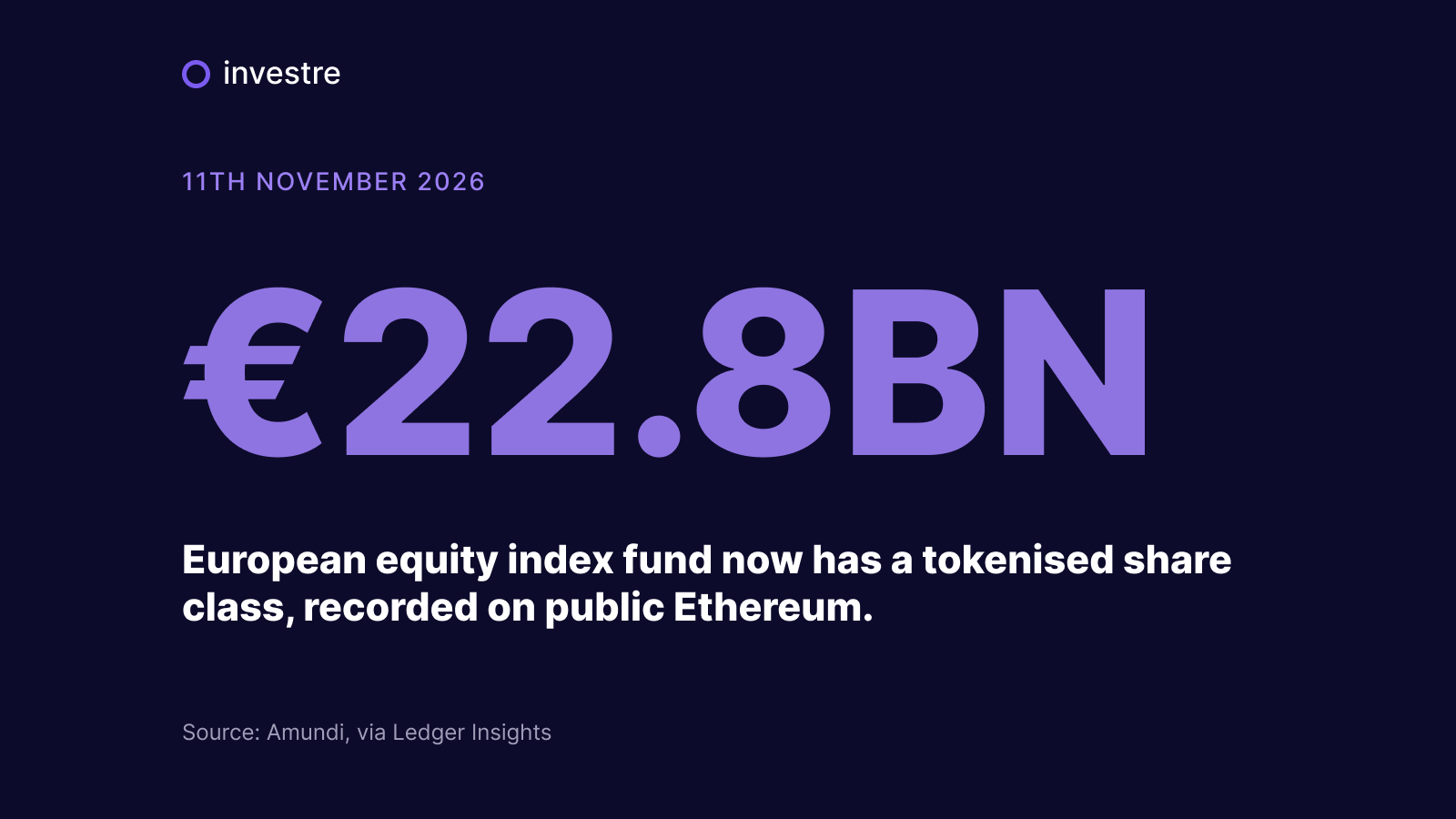
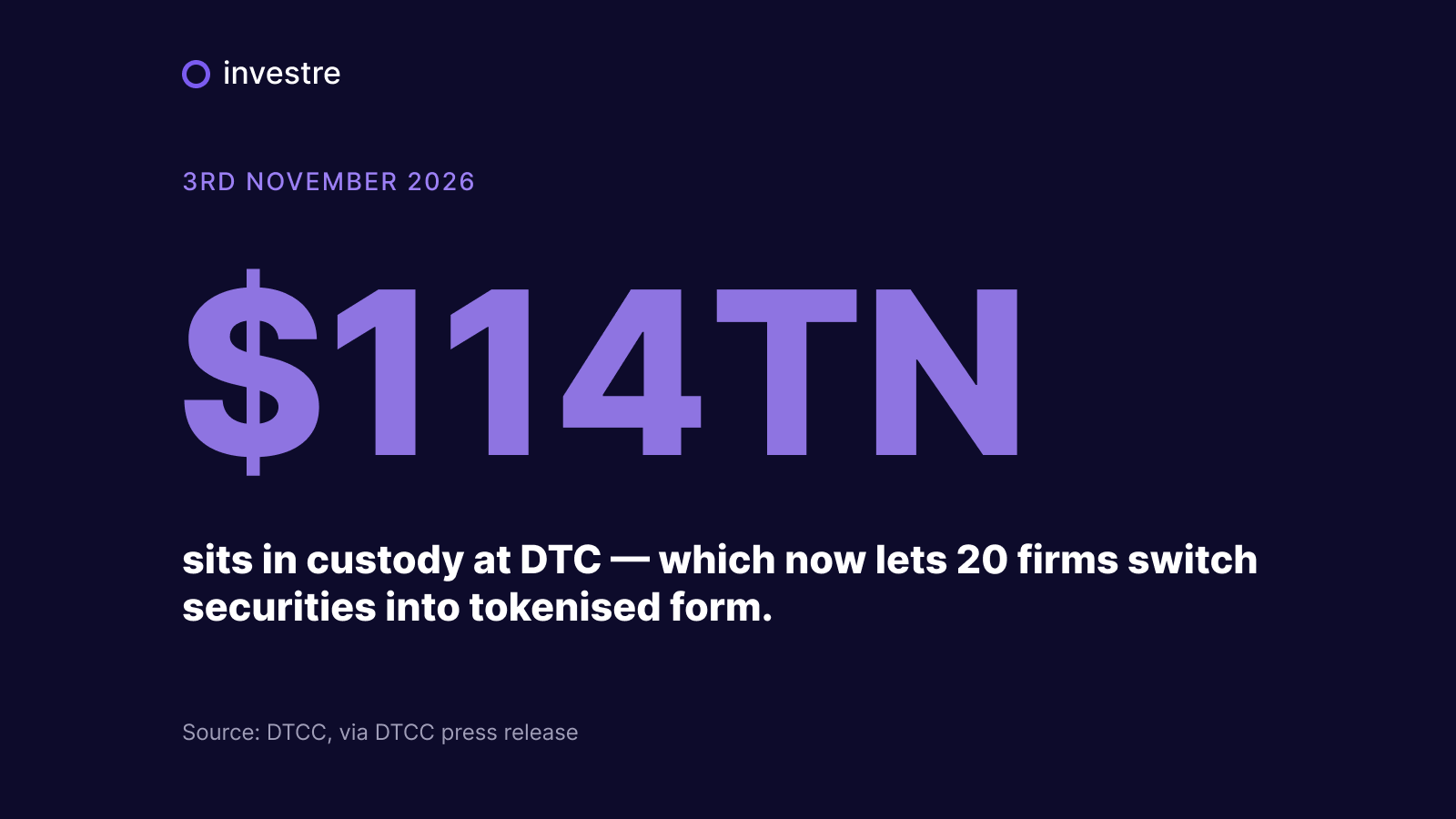
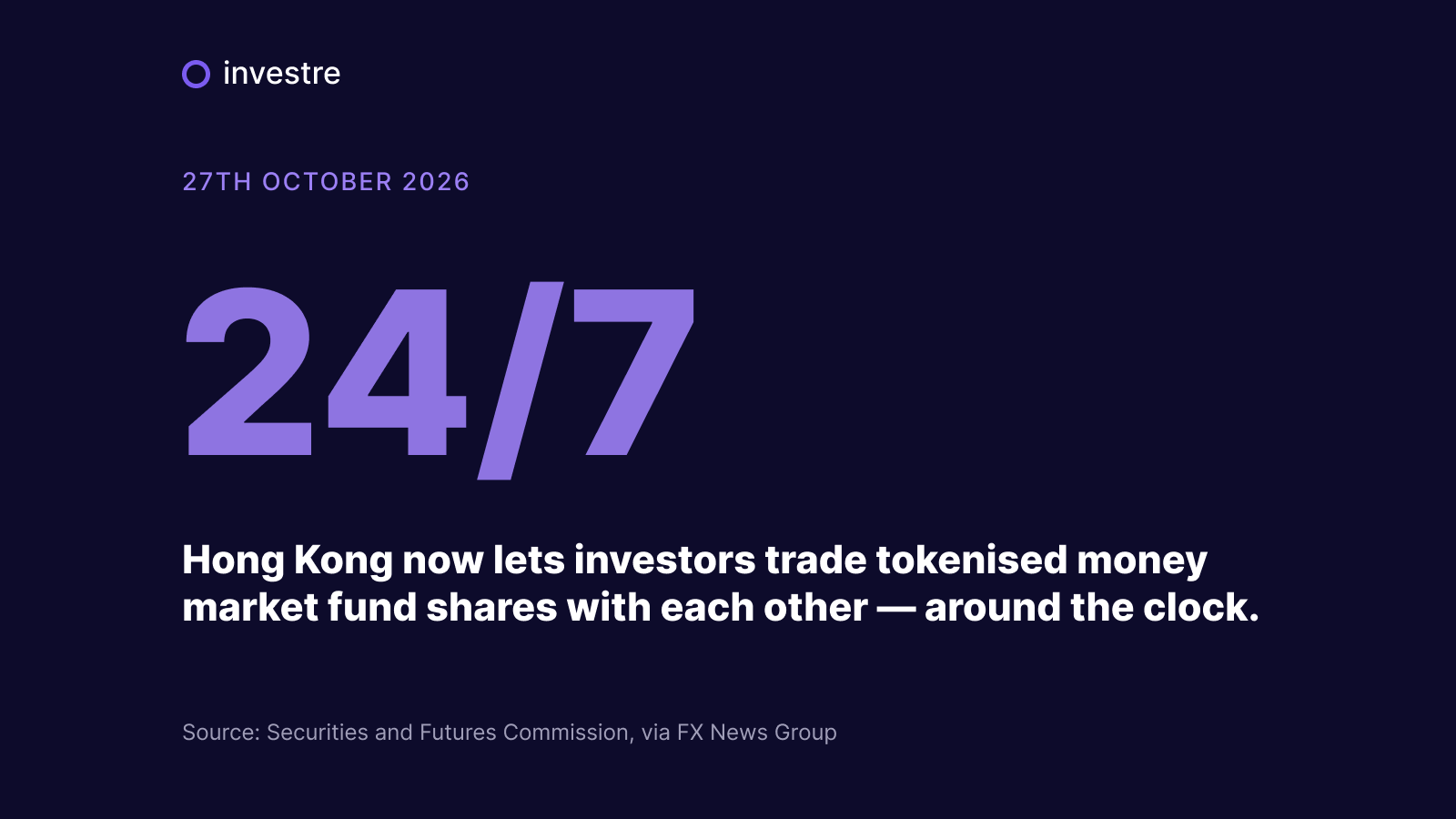
Tokenisation news, 17 November 2026
In the week to 17 November 2026, Paris-based Spiko said its tokenised money market fund had become the world's largest, most big US companies opted out of the OKX–ICE tokenised stock venue, and Morgan Stanley agreed to buy transfer agent Vinyl Equity.
Key takeaways
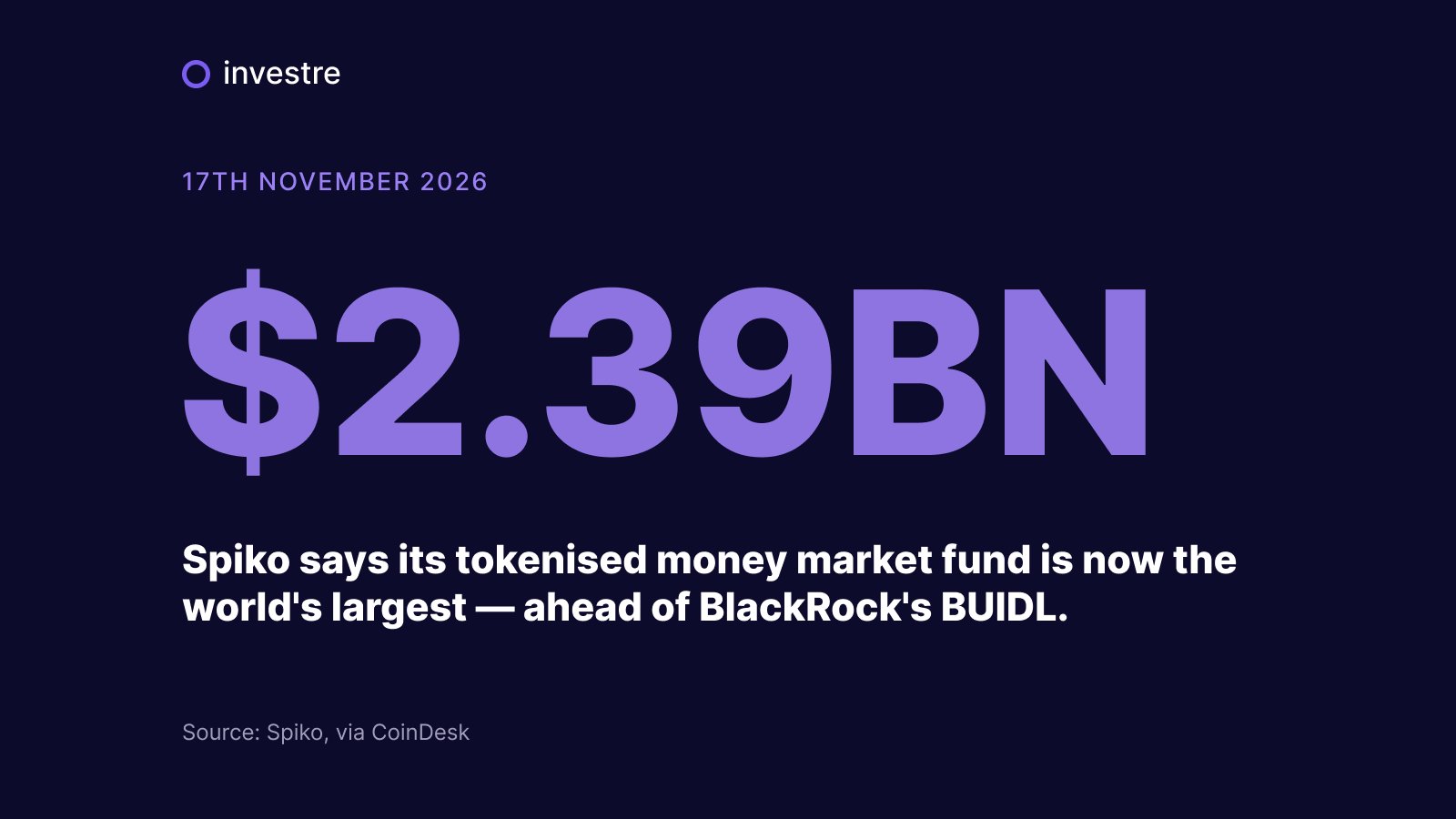
- Spiko says its Spiko Amundi Overnight Swap Fund held about $2.39 billion in late October 2026, which by its own count makes it the world's largest tokenised fund, ahead of BlackRock's BUIDL and Circle's USYC.
- OKXICE, the tokenised stock venue owned by OKX and NYSE owner Intercontinental Exchange, opens to eligible US customers on 23 November 2026 after Microsoft, Alphabet, Goldman Sachs and Broadcom were among the companies that blocked their shares.
- Morgan Stanley has agreed to acquire Vinyl Equity, an SEC-registered transfer agent, with the deal expected to close around Q1 2027, when the bank plans to start trading tokenised shares.
- Only six of the 63 stocks OKXICE named in October 2026 remain on its launch list, so most of its 70-plus assets will be 59 Direxion ETFs.
Spiko says its tokenised money market fund, built with Amundi and BNP Paribas, has overtaken BlackRock's BUIDL
Spiko, a Paris start-up that runs money market funds on a blockchain, says its flagship fund is now the largest tokenised fund in the world. The Spiko Amundi Overnight Swap Fund, launched about seven months ago with BNP Paribas and Amundi, held around $2.39 billion in late October 2026, which by Spiko's count puts it ahead of BlackRock's BUIDL and Circle's USYC. Assets have grown about 30% a month over the past three months, and the company now has more than 10,000 investors. Spiko offers its funds under the EU's UCITS framework, has made London a main office alongside Paris, and says it may expand to the US next year.
The Investre take: The world's largest tokenised fund is European, which undercuts the idea that Europe is behind on fund tokenisation. Its growth comes from making a plain money market fund easy to buy on-chain, and European managers with cash funds should be asking what stops them doing the same.
Microsoft, Alphabet and Goldman Sachs keep their shares off OKX–ICE's tokenised stock venue
OKXICE, a new venue for trading tokenised US shares run by crypto exchange OKX and NYSE owner Intercontinental Exchange, opens to eligible US customers on 23 November 2026, but most of the companies it planned to list have said no. A temporary SEC rule, the innovation exemption, lets listed companies block their shares from being tokenised on a venue, and Microsoft, Alphabet, Goldman Sachs and Broadcom are among those that did. Only six of the 63 stocks named in October are left, including Coinbase and Robinhood, so the venue will open mainly with 59 ETFs from US fund issuer Direxion.
The Investre take: When most large issuers say no, a tokenised stock venue ends up offering funds instead, a reminder that tokens created without the issuer's involvement depend on its goodwill. For fund managers the lesson runs the other way: tokenise your own share class, with the register kept by either a digital transfer agent or a Controlling Agent, and the question of consent never arises.
Morgan Stanley to acquire Vinyl Equity, gaining the shareholder registers that tokenised shares rely on
Morgan Stanley has agreed to buy Vinyl Equity, an SEC-registered transfer agent that keeps the official shareholder registers of listed companies, for an undisclosed price. The main goal is to add register-keeping to Morgan Stanley at Work, its employee stock plan business, which serves more than 3,400 companies. The deal also matters for tokenisation: when a company tokenises its own shares, they must be recorded in its official register, and owning the firm that keeps that register could let Morgan Stanley offer those shares for trading. The deal is expected to close around early 2027, when the bank plans to start trading tokenised shares on its own platform.
The Investre take: In tokenisation, whoever keeps the register decides what investors actually own, and Morgan Stanley has just bought that capability rather than relying on others. European fund managers should decide now who will keep the register for their tokenised funds, before a platform makes that choice for them.
What this means for European fund managers
Luxembourg fund managers already have the legal basis to act on this. Under Luxembourg's Blockchain Laws, a fund's share register can be kept directly on a distributed ledger, either by a digital transfer agent or by an authorised Controlling Agent under the Blockchain IV Law, depending on how the fund is set up. Investre is licensed for both models and was the first firm authorised as a Controlling Agent.
Further reading: Investre becomes the first Controlling Agent under Blockchain IV Law, or The Final Block podcast.
Authors