Tokenisation news, 13 October 2026
In the week to 13 October 2026, Luxembourg announced a €1 billion government bond issued directly on blockchain, the Council of the EU agreed to widen the DLT Pilot Regime, and the IMF published its study of tokenised US shares.
Key takeaways
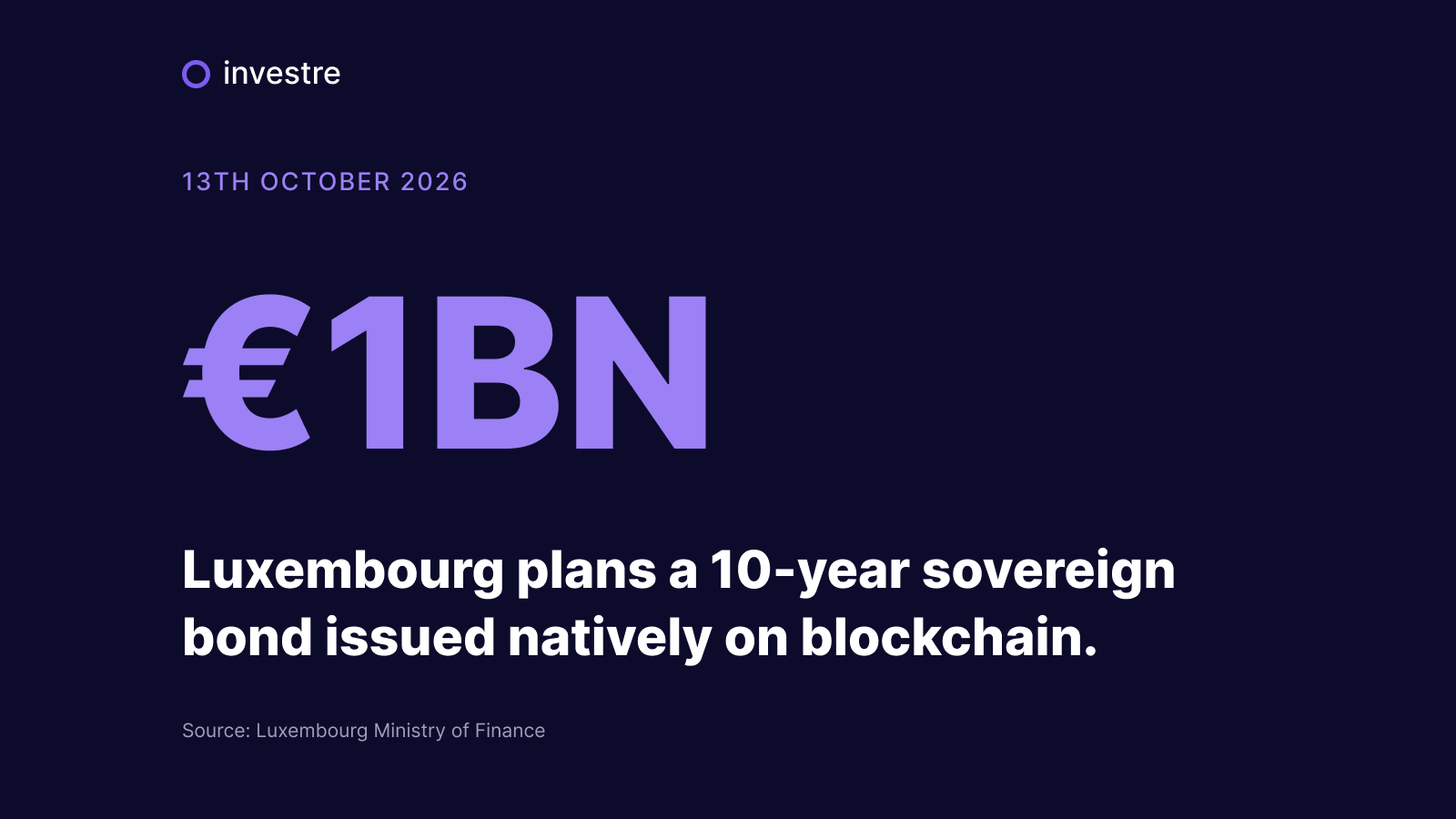
- Luxembourg's Minister of Finance, Gilles Roth, announced on 7 October 2026 a government bond of at least €1 billion issued natively on blockchain, with an expected 10-year maturity, governed by Luxembourg law and listed on the Luxembourg Stock Exchange.
- On 9 October 2026, the Council of the EU agreed key elements of its position on the Market Integration and Supervision Package, widening the DLT Pilot Regime and moving oversight of the largest cross-border market operators to ESMA.
- The IMF's October 2026 Global Financial Stability Report found that over half of trading in tokenised US shares happens while US exchanges are closed, with price swings around 1.5 times larger than in the underlying stocks.
- The IMF estimates the tokenised real-world asset market at about $65 billion as of 31 July 2026, of which tokenised shares make up roughly $2.3 billion.
Luxembourg to issue a €1 billion, 10-year government bond directly on blockchain
Luxembourg's Minister of Finance, Gilles Roth, has announced that the state will issue a government bond of at least €1 billion directly on a blockchain, rather than issuing a traditional bond and adding a digital record afterwards. The announcement came on 7 October 2026 as part of his presentation of the 2027 budget. The euro-denominated bond is expected to run for 10 years, will be governed by Luxembourg law and will be listed on the Luxembourg Stock Exchange. The government expects it to be accepted as collateral when banks borrow from the Eurosystem and calls it the first issue of its kind in Europe, with timing to be set once investors have been consulted and market conditions allow. It follows a digital treasury certificate the state issued in 2025.
The Investre take: When a government puts its own benchmark debt on a blockchain under its own law, the legal case for tokenised securities in Luxembourg is no longer theoretical. Fund managers who still treat on-chain issuance as an experiment are now behind their own government.
EU member states agree to widen the DLT Pilot Regime and move oversight of major market operators to ESMA
On 9 October 2026, the Council of the EU agreed key parts of its position on the Market Integration and Supervision Package, including changes to the DLT Pilot Regime, the EU's sandbox for trading and settling securities using distributed ledger technology. Member states want more financial activity to be allowed through the pilot so that more firms use it. The position would also move oversight of the largest cross-border trading venues, central securities depositories, clearing houses and crypto-asset service providers from national authorities to the European Securities and Markets Authority (ESMA). Funds would also be able to appoint a depositary in another EU country, subject to a national opt-out. Talks with the European Parliament can begin once Parliament adopts its own position.
The Investre take: A pilot only works if firms can run real volume through it, and EU member states are now acknowledging that. The next test is whether the final text gives tokenised fund units and their registers the clarity Luxembourg law already provides.
IMF finds tokenised US shares trade mostly out of hours and swing 1.5 times as much as the underlying stocks
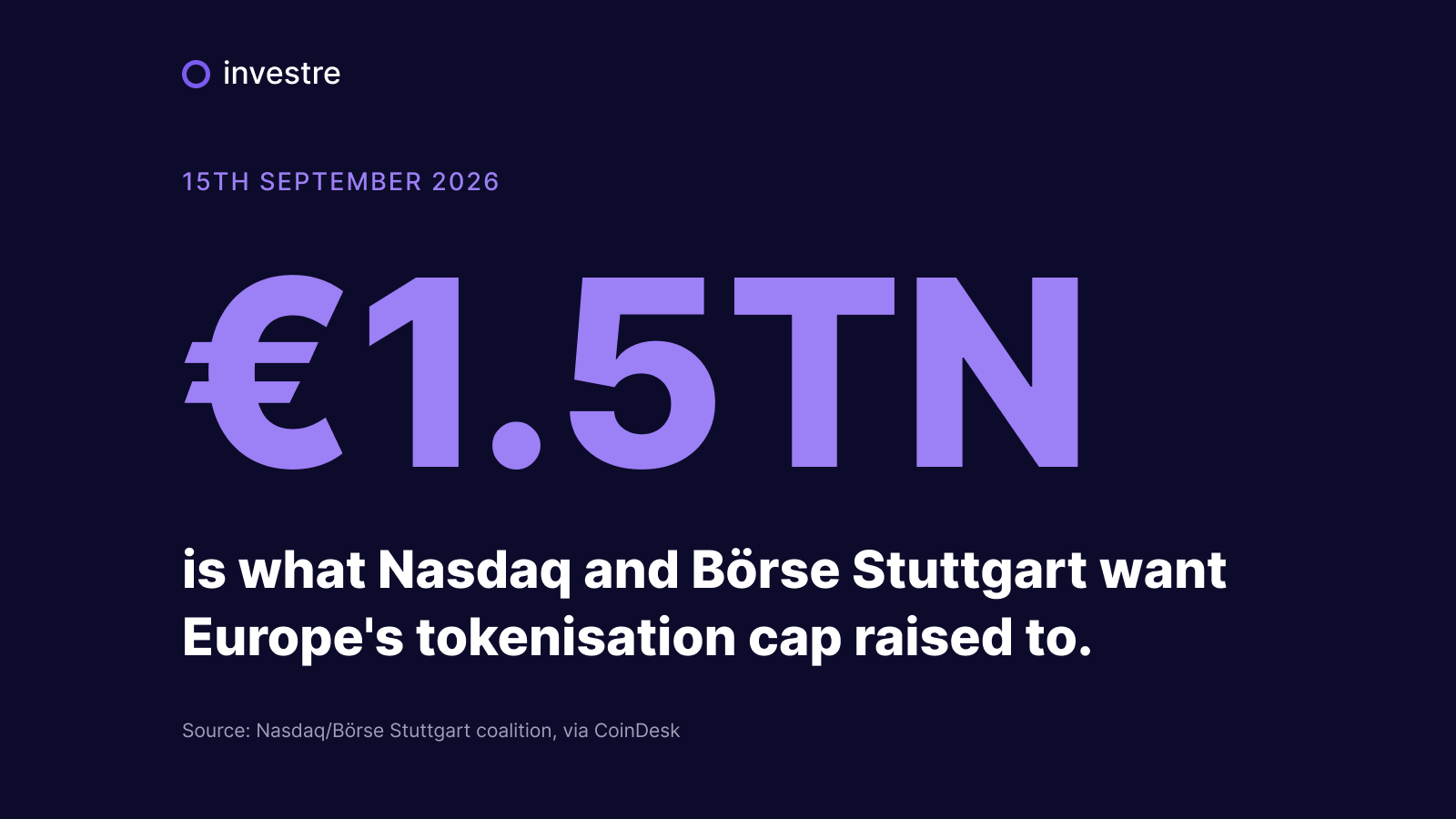
The IMF's October 2026 Global Financial Stability Report includes a study of tokenised US shares, which are blockchain-based tokens linked to stocks such as Tesla, Nvidia and Alphabet that can be traded on a range of platforms around the clock. Over half of trades took place while US exchanges were closed, and roughly four in five involved a fraction of a share. Price swings were around 1.5 times larger than in the underlying stocks, and liquidity was much thinner. The IMF puts the wider market for tokenised traditional assets at about $65 billion as of 31 July 2026, of which shares make up roughly $2.3 billion. It says legal rules on ownership, links between platforms and settlement arrangements need to be developed while the market is still small.
The Investre take: The first item on the IMF's checklist for safe growth is enforceable ownership, which is exactly what a legally recognised on-chain register provides. Luxembourg already has that role in law through the Controlling Agent; markets without one are building volume before they have settled who owns what.
What this means for European fund managers
Luxembourg fund managers already have the legal basis to act on this. Under the Blockchain IV Law, an authorised Controlling Agent can maintain a fund's share register directly on a distributed ledger, without the need for a transfer agent or central securities depository. Investre was the first firm authorised to take on this role.
Further reading: Investre becomes the first Controlling Agent under Blockchain IV Law, or The Final Block podcast.
Authors