
The Final Block Episode 12 | A token is not a token: What fund tokenisation actually means in Luxembourg
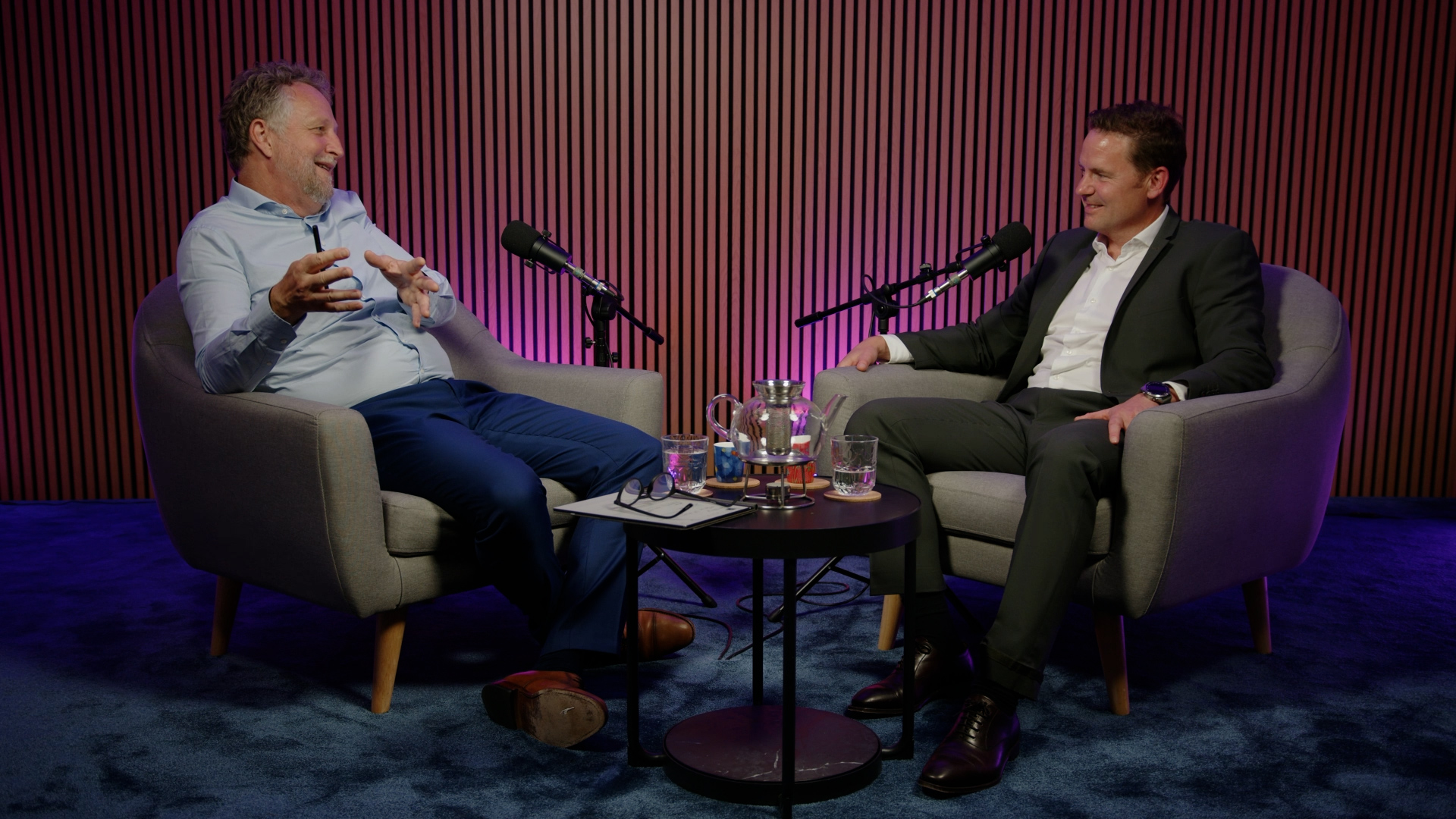
Yves Elvinger, partner at Elvinger Haus's investment fund department, tackles a confusion that comes up in almost every fund tokenisation conversation: the assumption that a "tokenised fund share" is a single, well-defined thing.
Two models, one underlying asset
Luxembourg funds can issue shares in registered form or in dematerialised form. Tokenisation maps onto both. Under the digital transfer agent (TA) model, shares stay registered in the traditional sense, but the register itself runs on the blockchain. Under the Control Agent model, introduced by Luxembourg's Blockchain Law IV, ownership is instead recorded in an issuer's account on a distributed ledger, with no traditional share register at all. Both can represent the same economic interest in the fund. What differs is how ownership and transfer are evidenced, and that has real downstream consequences for how the fund operates.
Central administration still applies, in full
Whichever model a fund chooses, it still has to satisfy the same core functions any Luxembourg fund must satisfy: client onboarding, investor protection, AML checks, fund accounting, and NAV valuation. Tokenisation doesn't remove any of these obligations, Elvinger explains. It changes how they're technically implemented, and Luxembourg's principle of technology-neutral regulation is what allows both models to be assessed and approved on a case-by-case basis, rather than the law having to be rewritten for each new platform.
Why money market funds got there first
Among the fund types experimenting with tokenisation, money market funds have moved fastest, largely because they're used as collateral in financial transactions. Collateral positions need to be adjusted quickly as counterparty exposure changes, and instant, on-chain settlement is a direct fit for that need. It's a clear example of tokenisation solving an operational problem rather than being adopted for its own sake, a distinction Elvinger returns to throughout the conversation: the fund product itself doesn't change, the infrastructure underneath it does.
No need to start from scratch
One practical question fund initiators often ask is whether tokenisation requires launching an entirely new vehicle. Elvinger's answer is no. Luxembourg's umbrella fund structure already allows different sub-funds and share classes to sit side by side, and that flexibility extends to tokenised share classes issued alongside a fund's existing traditional shares. A fund could, in principle, run traditional shares, TA-model tokenised shares, and Control Agent shares within the same structure, choosing the combination that fits its operational readiness and its investors' needs, rather than treating tokenisation as an all-or-nothing switch.
Where Luxembourg stands globally
The conversation also touches on how Luxembourg compares internationally, particularly against the US, where DTCC, the New York Stock Exchange, and NASDAQ are working toward 24/7 tokenised settlement later this year. Elvinger's view is that the European and US fund ecosystems are different enough, much like the European and US ETF markets already are, that Luxembourg isn't simply following the same path a few steps behind. Instead, the CSSF's decade of engagement with digital asset questions, through its innovation hub and ongoing dialogue with market participants, has put Luxembourg in a position of regulatory readiness that predates the current wave of public interest in tokenisation.
The overall message is a grounded one: tokenisation is an infrastructure shift, not a product shift. The fund stays the same fund, subject to the same rules. What changes is how efficiently it can be operated, settled, and eventually traded, and getting the legal model right from the start is what makes that efficiency possible.
Watch the full conversation with Yves Elvinger on The Final Block, or listen on Youtube or Spotify.
Authors

.jpg)